
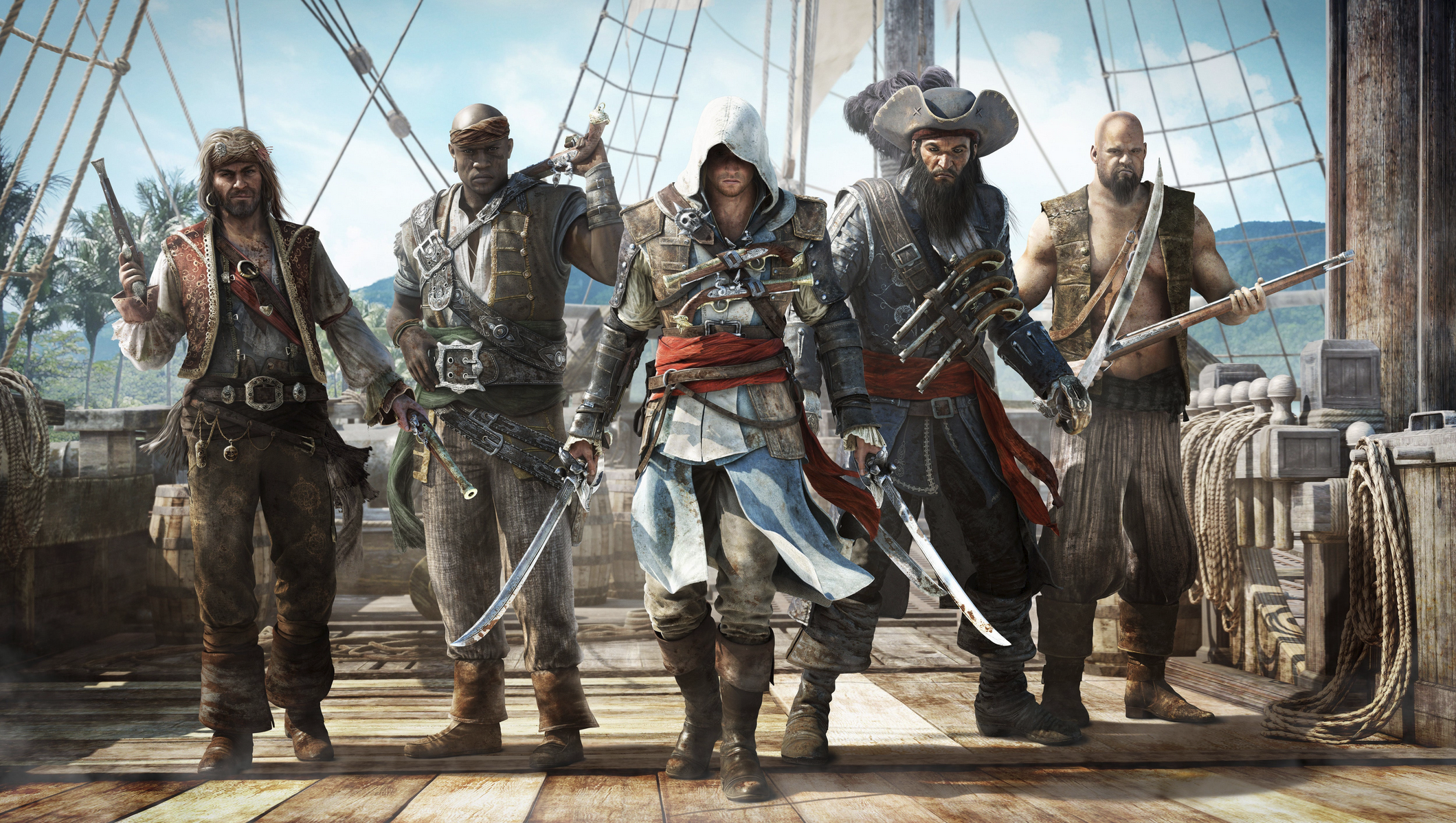
Edward Kenway's Caribbean adventure returns, rebuilt from the keel up in Ubisoft's Anvil engine.
Assassin's Creed Black Flag Resynced Review: Is the Pirate Remake Worth Boarding?
Judging Ubisoft's ground-up remake against the beloved 2013 original — sails hoisted, cannons loaded.
 By Stuart Coveney · · Updated July 07, 2026
There are precious few games from the last console generation that people still talk about with the sort of misty-eyed affection reserved for Assassin's Creed IV: Black Flag. Released back in 2013, it was the one where the series briefly forgot it was about hooded assassins clambering across cathedrals and instead let you become a rum-soaked pirate captain, singing sea shanties with your crew as you plundered your way across the West Indies. For a lot of us, it remains the high-water mark of the entire franchise.
So when Ubisoft announced Assassin's Creed Black Flag Resynced — a complete, from-scratch remake landing on 9 July 2026 for PlayStation 5, Xbox Series X|S and PC — the reaction was a curious mix of delight and dread. Delight, because who wouldn't want to sail the Jackdaw again with modern lighting and water physics. Dread, because remakes of cherished games have a nasty habit of sanding off the very edges that made us love them. I've spent a good chunk of time with the pirate life reborn, and I'm here to tell you whether it's worth boarding — or whether you should keep flying the flag of the original.
What Exactly Is Black Flag Resynced?
Let's clear up the most important point first, because "remake" is one of the most abused words in gaming. This is not a remaster. It is not the old game with a fresh coat of paint and a bump to the resolution. Black Flag Resynced contains zero code from the original 2013 game. Every line has been rewritten, every asset rebuilt, using the in-house Anvil engine and technology first developed for 2025's Assassin's Creed Shadows.
That's a genuinely enormous undertaking, and it shows. The Caribbean you remember is here — Havana, Kingston, Nassau, the endless glittering ocean between them — but it's been reconstructed with ray-traced lighting, micropolygon rendering and a brand-new dynamic weather system. There's even some environmental destruction thrown in, which changes how naval skirmishes feel entirely. On top of the reconstruction, Ubisoft has folded in roughly six hours of new content, including fresh storylines built around fan-favourite figures like Blackbeard and Stede Bonnet, plus three officers who join your crew as part of the main narrative.
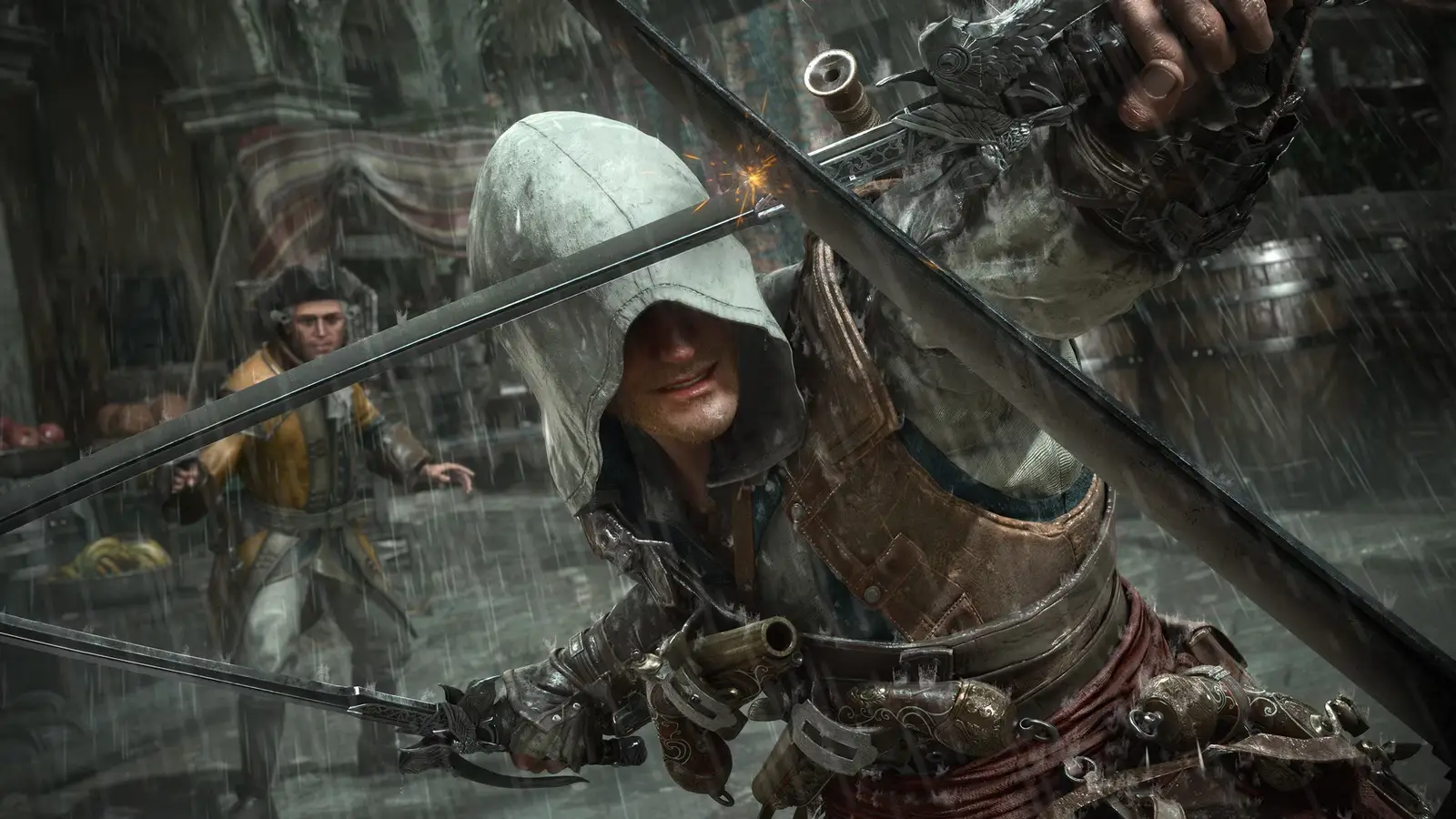
A ground-up rebuild: no code survives from 2013, and the visual leap is immediately obvious.
Because this is a full remake and not a remaster, don't expect to import old save data or find a "classic graphics" toggle. What you're buying is a re-imagining of Black Flag that stands on its own — a distinction worth keeping in mind if you were hoping for a faithful, pixel-for-pixel recreation.
The Naval Combat: Still the Beating Heart
If you played the original, you'll know that Black Flag's genius was never really the assassinating — it was the sailing. Standing at the helm of the Jackdaw, roaring orders as your crew belted out a shanty, then wheeling broadside into an enemy frigate and unleashing a wall of cannon fire: that was the magic. I'm delighted to report that the magic is not only intact in Resynced, it's been amplified.
Ship-on-ship combat is still absolutely brilliant, and now it looks genuinely spectacular. The advanced water physics mean the sea behaves like a real, moving, malevolent thing. Waves shove your hull. Storms roll in with waterspouts, rogue waves and forks of lightning that light up the rigging. The new destruction system means enemy ships splinter and shatter in ways the 2013 version could only hint at. Combine that with the ray-traced lighting bouncing off wet decks and it becomes one of the most convincing depictions of Age-of-Sail warfare I've experienced in a game.
Advanced Water & Weather Simulation
An Atmos-style weather system adds rogue waves, waterspouts, lightning and shifting storms that genuinely affect how a battle plays out. The sea is no longer a flat backdrop — it's an active participant.
Environmental Destruction
Enemy vessels and parts of the environment now break apart under fire, adding weight and spectacle to every broadside you unleash from the Jackdaw.
Alternative Fire Modes
Every armament on your ship can eventually unlock alternative fire modes. It's a small addition, but it layers just enough extra depth onto the combat without breaking what already worked so beautifully.
What I appreciate most is Ubisoft's restraint here. It would have been tempting to bolt on a dozen new systems and gadgets, but the alternative fire modes are the extent of the meaningful mechanical additions to naval combat — and that's exactly right. The original ship combat didn't need reinventing; it needed presenting in high definition with proper physics behind it. That's precisely what's happened.
Captain's Tip
Learn to read the weather before you commit to a fight. A storm rolling in isn't just atmospheric flourish — rogue waves and lightning can wreck your positioning, so lure larger enemy ships into rough seas and let the ocean do some of your dirty work.
On Foot: Combat, Stealth and Parkour Refined
Naval combat may be the star, but you spend a great deal of Black Flag on dry land, and this is where the remake makes its most noticeable gameplay changes. The land combat has been reworked into something that feels like a hybrid of the original Black Flag and the more deliberate fighting of Shadows. Edward now moves faster than he did in 2013, and there's a much stricter emphasis on parrying to break an enemy's guard before you can punish them.
Whether you love this depends on your temperament. Purists who adored the original's slightly loose, cinematic combat might find the new parry-focused approach a touch demanding. Personally, I think it's an improvement — engagements feel more intentional and less like button-mashing, and the increased movement speed makes Edward feel genuinely nimble rather than the slightly floaty protagonist of the original.
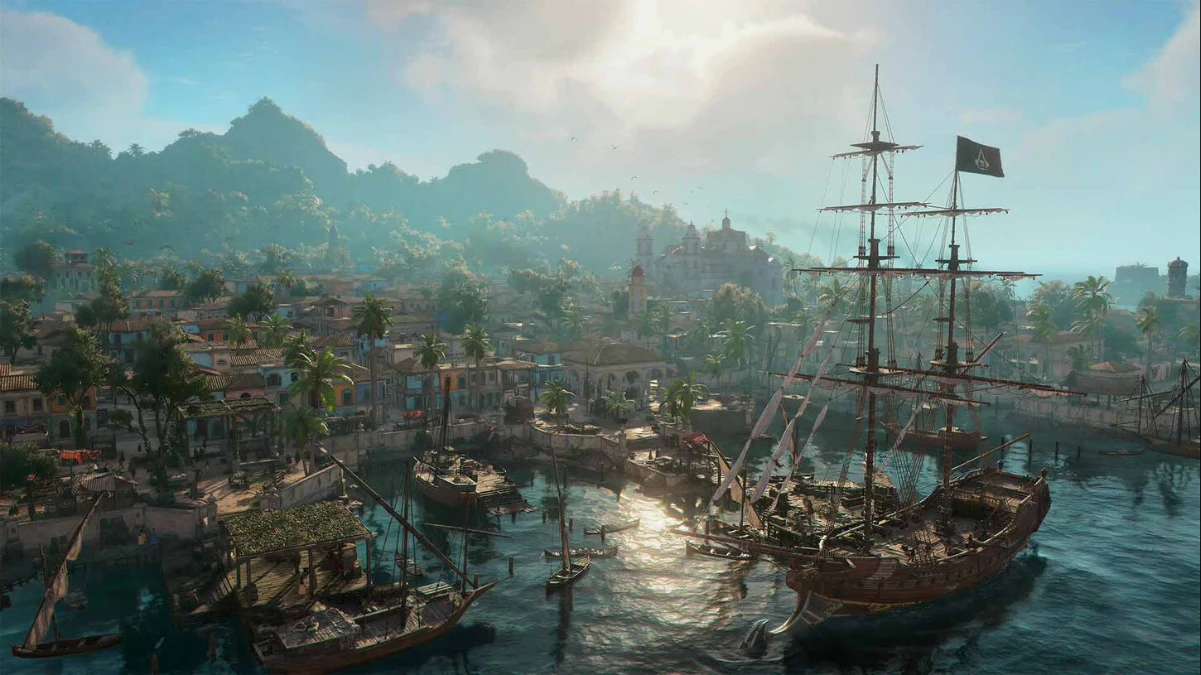
On-foot combat now leans on parries and faster movement, borrowing from the more deliberate fighting of recent entries.
Stealth and parkour get sensible modernisations too. The single most welcome change is that Edward can now crouch to stay hidden — a mechanic that was baffingly absent from the 2013 game and made stealth sections feel clumsy. Its addition alone smooths over one of the original's biggest frustrations.
The other big quality-of-life fix concerns those infamous tailing missions. In the original, if you were spotted or lost your target, it was an instant "mission failed" and a reload. In Resynced, that no longer happens. Instead, you'll need to find an alternative route to progress, which keeps you in the flow of the world rather than yanking you out to a loading screen. It's a small change on paper, but it removes one of the most dated and irritating design conventions from the original.
Crouch to Hide
The long-missing crouch mechanic finally arrives, transforming stealth from a frustrating guessing game into something genuinely controllable.
No Instant-Fail Tailing
Lose your target and the mission no longer ends abruptly. You simply find another way forward — a small mercy that removes one of the original's most dated annoyances.
Parry-Led Land Combat
Faster movement and a stronger emphasis on breaking enemy guards make ground fights feel more deliberate and satisfying than the 2013 version.
How It Runs: Performance Across the Consoles
Here's where a lot of remakes stumble, so I paid close attention. The good news is that Black Flag Resynced has been thoroughly modernised for ninth-generation hardware, with proper performance options across the board rather than a single locked frame rate.
On the standard PlayStation 5 and Xbox Series X, you get three modes: Performance, Fidelity and Balanced. Performance targets a smooth 60 frames per second, while Balanced targets 40 FPS. That 40 FPS Balanced mode is the sweet spot for anyone with an HDMI 2.1 display, offering what Ubisoft rightly calls "the perfect mix of high-fidelity graphics and fluid inputs." If your telly supports 120Hz output, I'd honestly recommend starting there before deciding whether you want to trade prettiness for the full 60.
On the PS5 Pro, all three graphical modes target an upscaled 2160p (4K), with frame rates ranging between 30 and 60 FPS depending on the mode you pick. Crucially, all three Pro modes feature extended ray tracing, so you get the full lighting spectacle regardless of which you settle on. It's a properly considered Pro implementation rather than a token boost.
Xbox Series S owners should temper their expectations. The game does support ray tracing on the little box and upscales to 1620p, but you're limited to a single 30 FPS fidelity mode with no access to the Performance or Balanced presets. It'll look lovely, but the buttery 60 FPS naval battles are reserved for the more powerful machines.
PC Performance and Recommended Hardware
PC players are, as ever, spoilt for choice — and for once the scaling appears sensibly documented. The game ships with a built-in benchmark tool offering 100% scene repeatability, which is exactly the sort of thing you want when you're fiddling with settings to find your ideal balance. The Steam preload weighs in at a fairly modest 65 GB, which is refreshingly restrained by the standards of modern open-world blockbusters.
Ubisoft has laid out clear performance targets across hardware tiers. If you're running something like an RTX 3060, RX 6600 XT or Intel Arc B580, you should hit 1080p at 60 FPS using Medium settings with Standard ray tracing and Balanced upscaling. Step up to a high-end machine and you're looking at 1440p using the High preset, while a flagship 4K rig can push the Ultra preset with Extended ray tracing and Quality upscaling.
Testing has been carried out with modern silicon including Nvidia's GeForce RTX 5050 and 4060 series cards, and the game supports DLSS 5 upscaling — so if you own a recent RTX GPU, you should get an excellent picture-to-performance ratio. And for the handheld crowd, Black Flag Resynced is Steam Deck Verified at launch, which is genuinely impressive for a ray-traced open-world title of this scale. Sailing the Caribbean on the bus home from work is very much on the cards.
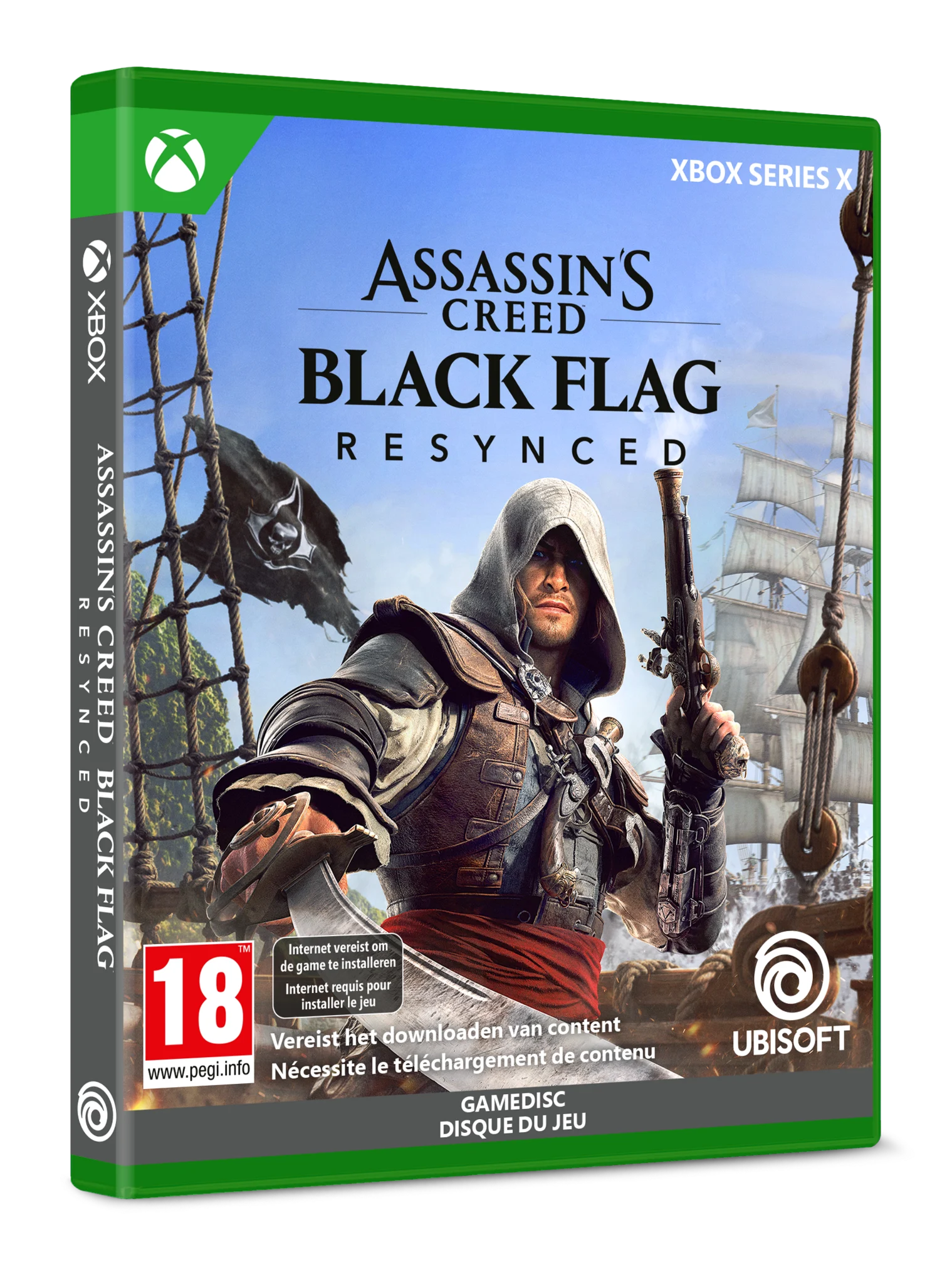
From Steam Deck to a 4K flagship rig with Extended ray tracing, the PC scaling is broad and clearly documented.
Visuals and Atmosphere: A Caribbean Reborn
Let me dwell for a moment on how this game actually looks, because it's the single most transformative thing about the remake. The Anvil engine, powered by tech from Shadows, delivers a Caribbean that feels alive in a way the 2013 version never could. Ray-traced lighting means sunsets bleed across the water, torchlit taverns glow warmly, and the interplay of shadow through jungle canopy is genuinely beautiful. Micropolygon rendering brings a density of detail to foliage, rock and wood that makes the world feel hand-carved.
The dynamic weather system deserves special mention. Watching a clear afternoon curdle into a thunderous squall as you approach an island, the sea turning from turquoise to slate grey, is the kind of moment that makes you put the controller down for a second just to look. It's not merely prettier than the original — it's atmospherically richer, which is a subtler and more valuable achievement.
There's also a meaningful technical improvement to how the world holds together. The open world now streams far more smoothly, and Ubisoft has removed the loading screens that used to interrupt you when entering major cities. In the original, popping into Havana or Kingston meant a pause and a load. Here, you simply walk in. It sounds minor, but seamless traversal does wonders for immersion — the Caribbean feels like one continuous place rather than a series of connected levels.
What to Look For
Take a moment during your first storm at sea to watch how the ray-traced lightning illuminates the rigging and reflects off the churning water. It's the clearest single demonstration of just how far the visuals have come from 2013, and arguably the game's finest showpiece moment.
How It Stacks Up Against the Competition
Black Flag Resynced doesn't exist in a vacuum. It's competing both with its own legendary predecessor and with the broader field of high-profile remakes and open-world adventures. Here's how I see it lining up.
| Feature | Black Flag Resynced (2026) | Black Flag Original (2013) | AC Shadows (2025) |
|---|---|---|---|
| Engine | Anvil (Shadows-derived) | AnvilNext (era-appropriate) | Anvil |
| Ray-traced lighting | Yes | No | Yes |
| Naval combat | Overhauled, advanced water physics | Genre-defining for its time | Not a focus |
| Dynamic weather | Full system with storms & waterspouts | Limited | Present |
| City loading screens | Removed — seamless entry | Present | Reduced |
| Crouch stealth | Yes | No | Yes |
| Tailing-mission fail state | No instant fail | Instant fail | N/A |
| New story content | ~6 hours (Blackbeard, Stede Bonnet) | — | Original campaign |
| Steam Deck | Verified at launch | Not applicable | Verified |
The takeaway is fairly clear. Against the original, Resynced is a comprehensive upgrade in almost every measurable way — the only thing the 2013 version has going for it now is nostalgia and, for some, its slightly gentler combat rhythm. Against Shadows, the comparison is more about flavour: Shadows is the modern flagship, but it doesn't scratch that pirate itch. Resynced brings Shadows-grade technology to bear on the most beloved setting the series has ever produced, which is a rather compelling proposition.
Editions and Where the Value Lies
Black Flag Resynced arrives in three flavours, and choosing between them mostly comes down to how much cosmetic and bonus content you want alongside the core experience.
Standard Edition
The full open-world campaign and all the base game content. Pre-orders add Blackbeard's Crimson Pack, including an Edward costume, sword and pistol.
Deluxe Edition
Everything in Standard plus the Master Assassin Character Pack and Master Assassin Naval Pack, with the Crimson Pack pre-order bonus on top.
Collector's Edition
Edward Kenway figurine, cloth world map, sea-shanty music sheet, exclusive SteelBook and digital content. Note: already sold out through official Ubisoft channels.
My honest take? For most players, the Standard Edition at £49.99 is all you need — it contains the complete game, and the pre-order Crimson Pack is a nice bonus. The Deluxe Edition at £59.99 is worth the extra tenner only if you specifically want the Master Assassin cosmetic and naval packs; they're pleasant flourishes rather than essential content. The Collector's Edition at £174.99 is a lovely thing for dedicated fans — that Kenway figurine and cloth map are proper display pieces — but with it already sold out through official channels, availability is going to be a scramble.
Ready to Set Sail?
Check the latest price and any current bundles on Amazon.
The Pros and Cons at a Glance
Pros
- Naval combat is better than ever — advanced water physics, destruction and stunning ray-traced lighting
- A genuinely gorgeous Caribbean with a superb dynamic weather system
- Seamless city entry with loading screens removed entirely
- Crouch stealth and no instant-fail tailing missions fix the original's biggest annoyances
- Roughly six hours of new story content featuring Blackbeard and Stede Bonnet
- Sensible, well-documented performance modes across PS5, PS5 Pro and Xbox Series X
- Steam Deck Verified at launch with a modest 65 GB install
Cons
- Xbox Series S is limited to a single 30 FPS fidelity mode
- The new parry-focused land combat may not suit purists who loved the original's looser feel
- No way to import old saves or revert to classic visuals
- Collector's Edition already sold out through official channels
- Deluxe upgrades are largely cosmetic and easy to skip
Who Should Buy Black Flag Resynced?
Returning Fans
If Black Flag was your favourite AC game, this is the definitive way to relive it. The upgrades honour the original whilst fixing its dated edges.
Naval Combat Lovers
Nothing else on modern consoles delivers Age-of-Sail warfare like this. The physics and lighting alone justify the trip.
Series Newcomers
Never played the original? Even better — you get the best version with none of the outdated frustrations, plus new story content.
PS5 Pro Owners
Upscaled 2160p with extended ray tracing across all three modes makes this a fine showcase for premium hardware.
The one group I'd urge to think carefully are Xbox Series S owners chasing high frame rates — you'll get a lovely-looking game, but you're locked to 30 FPS with no Performance mode, so temper your expectations accordingly. And if you're a die-hard who specifically treasures the original's slower, more cinematic land combat, be aware that the reworked parry system changes that feel noticeably.
Our Rating
Frequently Asked Questions
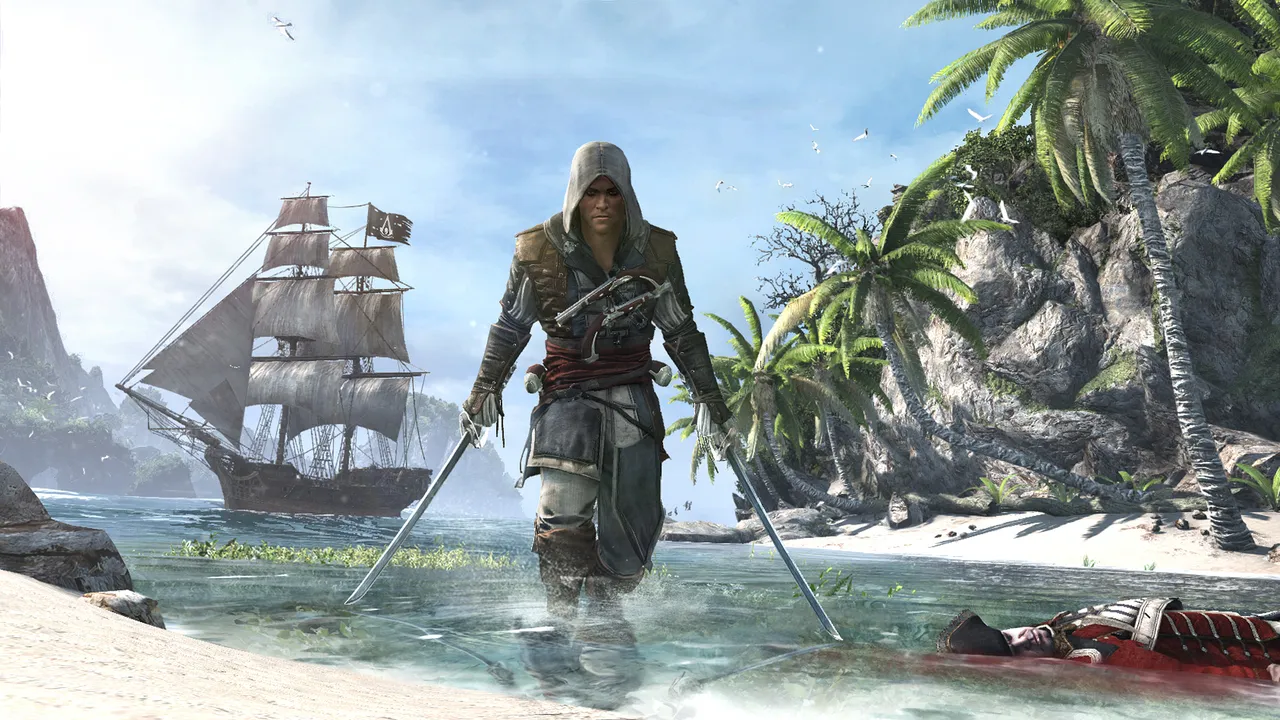
The Jackdaw returns — and this time she's sailing seas that behave like the real thing.
The Verdict
A Remake That Honours the Legend
Black Flag Resynced is exactly what a remake of a beloved game should be: reverent where it matters, brave where it counts, and gorgeous throughout. The naval combat — always the soul of this game — has been elevated by advanced water physics, destruction and ray-traced lighting into one of the finest depictions of sea warfare in gaming. On land, the crouch mechanic and the removal of instant-fail tailing missions quietly fix the original's most dated frustrations, whilst the reworked parry-led combat adds welcome intent even if it will divide purists.
Add roughly six hours of genuinely worthwhile new content, seamless city traversal, a sumptuous dynamic weather system and a sensibly documented spread of performance modes, and you have a remake that comfortably justifies its existence. Xbox Series S owners get a slightly clipped experience and hardcore devotees of the 2013 combat feel may grumble — but for everyone else, whether you're a returning captain or a first-time sailor, this is an unreserved recommendation.
Weigh anchor. This one's absolutely worth boarding.
Shop assassin's creed black flag resynced review on Amazon UK